"....remember that driver I shot through the mouth -- his teeth came out the back of his head? I think about him now and again. He didn't do anything to deserve to get shot."
--Clint Eastwood, 1992 (as William Munny in 'Unforgiven')
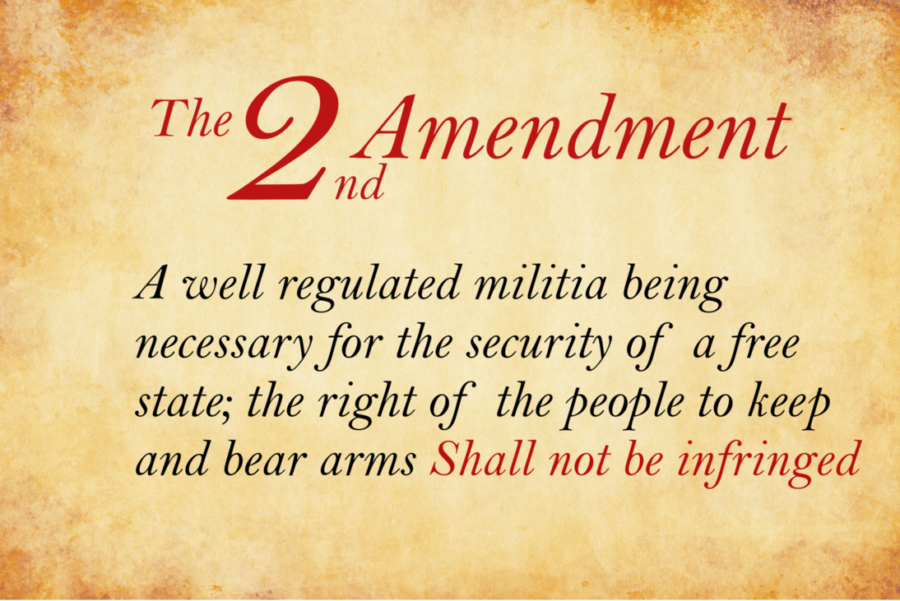
"In those five minutes of brave anguish for the country he loved forty-four years ago, Senator Kennedy addressed the growing endemic sickness engulfing the larger society: that of mindless violence. His words surely resonate with the sadness of our own time."
-- Letter 62: a culture of violence and the second amendment, 2012
I lay there in the bed. It was wet and I figured I had
peed myself after another round of drinking; there was that usual wisp of puke circling in the air. Then I heard the two voices
conversing in the hallway. I looked over and saw that the bedroom door was open
but the talkers were hidden by it. I could hear the two voices of my friends
and then a third.
The man’s voice -- the one I did not recognize -- said something hard to
understand. I could recognize Nelly’s Carolina drawl and Bertie's plain-spoken
New York tone. That’s right, I remembered, I am on Eightieth and Madison, at
Bert and Nellie Saint John’s. They had invited me to crash at their place for the week-end after I got to JFK since their grown children were out of town.
“A long time since I’ve seen that,” the third voice
trailed away.
“So it really is….” Bert’s voice remained unmistakable
though his accent was indistinguishable from a million other preppies roaming
the surreal island I once called home. Then I heard a slight sob. Nellie had
long known I was a sloppy drunk.
“Bertie, this is so sad. He is all alone…”
The third voice rang out, “Ma’am it is not as certain as that. Keep him filled
up with liquids – it’s the dehydration….” Again the third voice trailed off.
As my eyelids lowered inexorably in a euphoria of what felt like morphine, Bert said, “Thank you for
coming over here again on such short notice, Doctor Lincoln….”
Nellie chipped in by saying, “And on a Sunday, too.”
“Two floors by elevator is hardly an imposition. Look, just keep him under wraps, he may be prone to…”
***
Waking up slowly, I then sat bolt up-right. Though I
could not look out the window, I could see that it was still daytime. I heard
nothing. I picked up my watch from the night-table: quarter-of-four and still Sunday.
Damn, I could remember nothing after Friday’s dinner. What a bender; must have been the jet-lag, too. Naked and drenched
in sweat, surely from the delirium tremens, I quietly put on some clothes since
I was running late.
When I heard Bert and Nellie carrying on in the kitchen, talking about my recent trip to shutter failed business number-three in Shenzhen, I slipped quietly out the door. I did not want to impose any more upon my hosts and I was embarrassed by my debauched drinking. And I was
already running behind schedule to see the three men who had oddly invited me to high tea at the
Stanhope Hotel on Eighty-fourth and Fifth at four.
Tea at the Stanhope at four? Hmmm. I was curious and figured they were fellow
rakes out for some fun or to talk off a hang-over on another boring Sunday. I walked down all eighteen
flights of stairs to avoid detection by the doorman, surely on alert, and slipped through the service entrance, still sweat-soaked; already discoloring my pressed and wilting khakis, not to mention my cotton
button-down shirt, rolled up at the sleeves, clammimg against my skin.
Just in case, I told the deliveries attendant at the side-door where I was headed, should the Saint Johns in apartment 911 be looking for me. Why I hadn’t noticed the thunder before
I hit the street is beyond me. It was too late to sneak back for my
wind-breaker. So I got drenched in a down-pour on the way. On the
up-side, at least the dripping sweat from the D.T.s would not be so obvious.
The Stanhope stood out in the opulence of the Upper East Side as a quaint old hotel that felt like one of those London
row-houses turned into a city inn. I strode into the Stanhope the way I walked into any place soaked and
under-dressed: as if I belonged there. Ignoring the other people’s cocked brows
and various visages of disdain, I strode into the tea-room, lined with those affected
stenciled fox-hunting scenes on some pseudo-Victorian wall-paper, bright with blue
and yellow flowers.
Off in the corner, a rather dark corner away from the
front windows, three men waved at me. They were dressed weirdly. But a lot of
people dressed strangely in Manhattan and no one else seemed to notice. Sweaty and smelly like me? Yes, everyone noticed that. But funky, faggy clothing? No one cared. Being odd was this city's peculiar conformity. As I walked
over toward the table, I asked the Maître d´ to bring me some tea and, since I
had that post-boozy cotton-mouth, ice water along with an extra serving of petits-fours
and finger sandwiches.
Seems I had not eaten, either. I arrived at the table
and introduced myself to find out if I were the fellow these three guys were
looking for. Honestly, I normally would have felt uneasy meeting three
obviously gay men, but it was about four in the afternoon in a public place like
the Stanhope. Nobody would notice.
The men stood up. A little shrimp stuck out his hand
and said, “Four o’clock. Thank you for being prompt, Sir. In any case, I am Jim
and these are my friends, George and Tommy.” George was average height, perhaps
a half-inch taller than I and quite corpulent. Tommy was quite tall and as thin
as Jim. Whereas Jim was inquisitive, Tommy seemed aloof, contemplative. George was
an outgoing mixture of the two. We all sat down as my tea and eats arrived.
I asked curiously, “You all from the City?”
The three looked uncertain. Apparently, they weren't sure whether I was referring to New York,
Philadelphia, Boston, Charleston or Baltimore. They were puzzled. And so was I. Finally,
the phlegmatic George spoke up, “If you mean New York, Sir, then the answer is
‘oh heavens, no.’ We are just three farmers from Virginia. We have been bound to the ground recently and we had been hearing so much about New York. What a dazzling
place!”
“I don’t think so,” Tommy quipped. “I actually see it as rather dreary, especially in the rain.” They
all had a slight Southern accent, though it sounded more than faintly English
to my untrained ear.
Jimmy, the shrimp, laughed and said, “Oh, Tommy, for such an educated man, you
really can be a post in the mud. Look at all these things these people have.
Can’t say life is nasty, brutish and short around here…”
Tommy crossed his arms and fired back at Jim, “Indeed you’re correct, Sir
James, life here looks to be nasty, brutish and long – what with it all being
about money, money, money…and people working themselves to death, never
reading, always gossiping, always attached to some contraption. Thank you, but no.”
George raised his fleshy hand and waved off the growing debate, “Gentlemen!
Gentlemen! We have to depart shortly. We can’t squander what little time we have and
never ask this fellow,” as George looked at me, “what we came all the way up here
to ask him.”
These flits wore funny clothes -- something like Tux shirts from a déclassé junior prom and long coats like an undertaker -- and talked funny. Nonetheless, I felt honoured that these
three obviously educated men would seek me out from among everyone else in New
York. I felt discovered, finally.
George then looked at me and asked, “You are aware of
what happened in that part of New Spain south of Georgia a week ago last
night?”
An odd way of putting it and so I asked for confirmation. “You mean that mass
shooting in Orlando, F-L-A?” This question apparently came across to these men as
strange and unwelcome; yes, their interest in the LGBT massacre merely betrayed their gay ways. Their eyes glazed over slightly. So I continued, carefully
avoiding the mine-field of political correctness, “The place where forty-nine
people were shot to death?”
Jim sat up, “Yeah that place. For dancing or something.”
‘Whatever,’ I thought to myself. Consequently, I played along because I did not
want them to think I was homophobic, “Yeah. That was a shame, wasn’t it? ISIS
and going after gay people.”
“ISIS?” George seemed confused.
That question surprised me but I answered it anyway. “Yes, ISIS. The Islamic State of Iraq and Syria.”
Tommy put his hand on George’s forearm to get his
attention, “I think he means the Barbary Pirates.” Another oddity out of the three musketeers, Or stooges? That jury was still out.
Pouring himself a tea, the diminutive Jim, rolled his
eyes and said, “Not those people again…” He then looked up at me and asked
mater-of-factly, “Tell me, how did you respond to that massacre?”
I pointed at myself and asked, “Me?”
“Of course, you.” Tommy kept his posture as straight as the other two. Strange that these men rarely sat back in their chairs.
I shrugged my shoulders and answered somewhat warily, “Well, I supposed I prayed.”
“And?” All three seemed to exclaim this question
simultaneously, as if on cue.
I looked quickly at each of Jim, George and Tommy. “And, what?”
I stated plainly, “Hey, at least I have written against violent Islam—“
Tommy cut me off as he leaned slightly toward me, “Just another superstition…”
I now found the strength to argue, whether or not I looked like a homophobe, “No, it’s more than a superstition, Sir. It’s a totalitarian ideology preying on innocent people, especially other Muslims.”
George tried to calm things down by intervening gently, “I think he means Mohammedans, gentlemen.”
Jim now spoke up, also training his eyes on mine, “Call them what you like but why did that terrible man have a gun that can shoot five balls per second? I mean, when I go turkey shooting on the farm, I am lucky if I can get five balls out in a minute.”
“Oh yes, that Tory intellectual magazine we saw at the kiosk. Interesting you use the same term that fellow did about hatred toward the Jews…”
I fired back at the pretentious language, since George had just busted me for not citing Goldhagen, “Yes, George, at the corner newsstand.” The headache up-ticked another notch.
Tommy stepped in for George, “Of course, those Barbary Pirates are rascals but they are not why we wanted to speak with you. We want to ask you why such a terrible man had that kind of super-rifle, as Jim, here, points out.”
I slouched back and crossed my arms and said irritably, making it clear to these butterflies that my patience had its reasonable limits, “I guess you have never heard of the Second Amendment to the Constitution of the United States of America, huh?”
The three men looked at each other, flabbergasted at first and then quite annoyed with my attitude. Jim said, “Of course we have heard of the Second Amendment. We surely know it better than you.”
Likewise, I did not take kindly to being patronized by three aging quasi-cross-dressers. “Then you know how important it is for citizens to bear arms…you know, to prevent tyranny. A population disarmed is a population…“
Tommy and George looked at each other. Tommy signaled for George to go ahead by quipping, “You answer this, George. After all, I copied you.”
George looked over and smiled at his friend, perhaps partner. He leaned forward slightly to take up the challenge. I was looking forward to this part of the tea. Like so many others before them, these liberal and liberally powdered snobs would never get past the literal reading, or strict construction, of the words. He said, “That right has its limits. For one, it is intended to apply to state militias…”
That delightful tingle of intellectual sadism ‘sconced’ on my head, though my sentiments were anything but Franciscan; it was that sensation of bliss I usually felt just before I smashed petty naïveté into a thousand shards of cheap, forgettable crystal. “Sorry, my friend, that state militia is now the National Guard and works basically as an adjunct to the national military services.”
Tommy looked at me, waving me off, “Okay, your point conceded. Yet you really don’t think that, if tyrants in Washington – I’ll explain all that to you later, George – sent the army to a state to take it over...You really believe that the citizens in the National Guard would not fight back for their home state and the security of their neighbors? Au contraire, Monsieur, I think they would."
Tommy paused, rubbing his chin briskly as he was chewing the cud on some abstruse point, and then straightened his posture with a start, "Besides, Sir, you also forget -- conveniently, I should think -- that George, here, wrote that Amendment at a time when crazy George, not this one," as Tommy wagged his thumb at his friend and winked, "was licking his fingers to come after us since the republic was floundering. Ah, but forget about all of that, shall we? No one is poised to invade America these days.”
The latter part of the argument was new, therefore suspect, to me. So I finessed that red herring of sovereignty, preferring to focus on insurrection instead. I argued back, “If the Guardsmen did that, they would plainly be in rebellion . . . duh.”
Tommy slapped the table lightly in triumph, “Exactly. Rebellion. That Second Amendment is a right to revolution, not permission for just anyone to go running around with some super-weapon three hundred times more deadly than a normal gun.”
I asked, “Normal gun?”
Jim lost his patience, “A musket, genius. After all, we wouldn’t have common smiths ambling around with cannons, would we?”
The dated language eluded me completely. Why bring up muskets? Accordingly, I ignored that anachronism by retorting, “Look, the Second Amendment says nothing about revolution; it may imply it in a loose construction. Nevertheless, Sir, it spells out an absolute right to bear arms. That means any arms, like an AR-15, that are not military-grade weapons or, as you might say charmingly, militia-grade.” The headache was intense now and beginning to throb, making my sarcasm all the more biting.
 George laughed aloud and looked at his confrères, clapping gaily, “Boy-oh, boy-oh, James
and Thomas, did you hear that one?" He nods toward me as continues, "He thinks we meant everybody merits one of these horrid weapons. Our Amendment merely confirmed the very right of the peoples of the separate states to take up arms separately from a tyrannical far-off national government. Where did we fail to make this distinction?”
George laughed aloud and looked at his confrères, clapping gaily, “Boy-oh, boy-oh, James
and Thomas, did you hear that one?" He nods toward me as continues, "He thinks we meant everybody merits one of these horrid weapons. Our Amendment merely confirmed the very right of the peoples of the separate states to take up arms separately from a tyrannical far-off national government. Where did we fail to make this distinction?”
Tommy and Jim chuckled and looked directly at me. I bristled at their arrogance quickly deflating my clever riposte. George was not deterred as he looked at me and asked, “So you are saying, laddie, that there are no conditions to the right for just anybody to bear arms?”
“Absolutely.” I stuck my chin forward, almost defiantly.
Jim said, “Then, this fantastic moving image – the inter-net I think you name it – should be able to show scoundrels forcing their pleasures on little girls and boys, not to be stopped because of the First Amendment, right?”
This pettiness annoyed me, trying to trip me up on protected speech. “Absolutely not. That’s not what the founding fathers had in mind as their legislative intent—“
The three men guffawed almost rudely with that attitude of, ‘He is talking to us about the founding fathers, hah!’ Usually I harbour no ill-will toward homosexuals but I really am fed-up with the way so many get in my face with their self-righteous contempt of me for being normal, as if I were some bigot for not thinking the way they do and openly endorsing their every whim.
Tommy then turned serious as he spoke to me, “Well, if you can’t limit the Second Amendment to prevent these super killing machines, then you can not limit the First to prevent Jemmy’s grisly images.”
I was not about to be intimidated, “Sorry, Sir, the First Amendment protects specifically defined ‘protected speech’ only. Any average history student knows that.” I wheeled my eyes full circle in mock distaste to foreclose any response. That maneuver also quickly fell to dust.
George leaned forward and said, staring out with a twinge of mockery, “Well, friend, legislative intent applies to the Second Amendment as well. States need militias and they have them, though the loss of their independence from a standing army and navy disturbs those of us who know better. The intent is primarily for the citizenry to protect itself from tyranny or anarchy. It is most assurèdly not to confer an absolute license for anybody to get a super-gun whether his humours are balanced or not, whether he is evil or not. Guns, like liberty, were not made for everybody...”
Those quaintly queer words again. Then Tommy chimed in before I could get a word in edge-wise, “Besides, you have entirely over-looked one simple fact.”
My now massive head-ache was going migraine on me, making me pugnacious, “So, what is that, herr professor?”
Tommy remained calm and he answered matter-of-factly, “That, Sir, the world belongs in usufruct to the living.”
My eyes were hot now, my vision beginning to blur, with the migraine and my civility had petered out, “What the fuck does that mean?”
Jim, the mad midget, put his elbows on the table – a first for any of the gay-baits – glaring at me, seething with resentment and quite ready to deck me, “How dare you use language like that about my friend and fellow President! Have you no respect even for the office?”
I looked quickly at each of Jim, George and Tommy. “And, what?”
George was the most outgoing of the three and seemed a bit more open with his
feelings; being fat and in New York on a sticky week-end forced him to remain
overly engaged lest he nod off, or so I supposed. He leaned toward me and asked
bluntly, “We want to know what you did after you prayed.”
I slouched back in my seat to distance myself. This inquisition bothered me. Additionally,
I could feel a headache coming on quickly, the damnable opioid apparently slipping away. Nervously, I giggled and
said, with a faint and slightly enquiring smile, “Prayed some more?” The three men looked at each other. Their eyes seemed
a little cold, their expressions slightly hardened. Never one to handle silence
well, I spoke up, “Look, gentlemen, I believe in the value of prayer.”
George looked at me and said, “Obviously, I do, too, young man, as I am an elder of the Protestant Episcopal Church of Virginia. Yet even I know that praying in
the face of evil is like singing a pub-song on the gallows.”
Aside from the queer phrasing, I felt deeply defensive and under attack. To
push back, I resorted to some timely ‘smartitude’ and snapped back at George,
“Well, what else am I supposed to do, grow a pony-tail like somebody gone hippie
way too long?” George stiffened at my defensive counter-punch at his locks in need of cutting.
“You tell us.” Tommy was cold, analytical in his tone. I did not much like
him or his long sandy blond hair streaked with the grey of age. We locked our eye
contact into a contest of wills. My head hurt a little more.
I stated plainly, “Hey, at least I have written against violent Islam—“
Tommy cut me off as he leaned slightly toward me, “Just another superstition…”
I now found the strength to argue, whether or not I looked like a homophobe, “No, it’s more than a superstition, Sir. It’s a totalitarian ideology preying on innocent people, especially other Muslims.”
George tried to calm things down by intervening gently, “I think he means Mohammedans, gentlemen.”
Jim now spoke up, also training his eyes on mine, “Call them what you like but why did that terrible man have a gun that can shoot five balls per second? I mean, when I go turkey shooting on the farm, I am lucky if I can get five balls out in a minute.”
Strange gay dude, I thought; fixated on male privates. He likes old-fashioned
hunting. Maybe he enjoyed the challenge to his skills required in re-loading and
shooting each round like the days of the Civil War or something.
Turning away from my usual cheekiness, I obliged my hosts; after all, they had invited
me. “Look, gentlemen, I have written against eliminationist jihadism persuasively
– if the rush of comments following my articles is any indicator – in the American
Review magazine, calling for action for some time now.”
“Oh yes, that Tory intellectual magazine we saw at the kiosk. Interesting you use the same term that fellow did about hatred toward the Jews…”
I fired back at the pretentious language, since George had just busted me for not citing Goldhagen, “Yes, George, at the corner newsstand.” The headache up-ticked another notch.
Tommy stepped in for George, “Of course, those Barbary Pirates are rascals but they are not why we wanted to speak with you. We want to ask you why such a terrible man had that kind of super-rifle, as Jim, here, points out.”
I slouched back and crossed my arms and said irritably, making it clear to these butterflies that my patience had its reasonable limits, “I guess you have never heard of the Second Amendment to the Constitution of the United States of America, huh?”
The three men looked at each other, flabbergasted at first and then quite annoyed with my attitude. Jim said, “Of course we have heard of the Second Amendment. We surely know it better than you.”
Likewise, I did not take kindly to being patronized by three aging quasi-cross-dressers. “Then you know how important it is for citizens to bear arms…you know, to prevent tyranny. A population disarmed is a population…“
Tommy and George looked at each other. Tommy signaled for George to go ahead by quipping, “You answer this, George. After all, I copied you.”
George looked over and smiled at his friend, perhaps partner. He leaned forward slightly to take up the challenge. I was looking forward to this part of the tea. Like so many others before them, these liberal and liberally powdered snobs would never get past the literal reading, or strict construction, of the words. He said, “That right has its limits. For one, it is intended to apply to state militias…”
That delightful tingle of intellectual sadism ‘sconced’ on my head, though my sentiments were anything but Franciscan; it was that sensation of bliss I usually felt just before I smashed petty naïveté into a thousand shards of cheap, forgettable crystal. “Sorry, my friend, that state militia is now the National Guard and works basically as an adjunct to the national military services.”
Tommy looked at me, waving me off, “Okay, your point conceded. Yet you really don’t think that, if tyrants in Washington – I’ll explain all that to you later, George – sent the army to a state to take it over...You really believe that the citizens in the National Guard would not fight back for their home state and the security of their neighbors? Au contraire, Monsieur, I think they would."
Tommy paused, rubbing his chin briskly as he was chewing the cud on some abstruse point, and then straightened his posture with a start, "Besides, Sir, you also forget -- conveniently, I should think -- that George, here, wrote that Amendment at a time when crazy George, not this one," as Tommy wagged his thumb at his friend and winked, "was licking his fingers to come after us since the republic was floundering. Ah, but forget about all of that, shall we? No one is poised to invade America these days.”
The latter part of the argument was new, therefore suspect, to me. So I finessed that red herring of sovereignty, preferring to focus on insurrection instead. I argued back, “If the Guardsmen did that, they would plainly be in rebellion . . . duh.”
Tommy slapped the table lightly in triumph, “Exactly. Rebellion. That Second Amendment is a right to revolution, not permission for just anyone to go running around with some super-weapon three hundred times more deadly than a normal gun.”
I asked, “Normal gun?”
Jim lost his patience, “A musket, genius. After all, we wouldn’t have common smiths ambling around with cannons, would we?”
The dated language eluded me completely. Why bring up muskets? Accordingly, I ignored that anachronism by retorting, “Look, the Second Amendment says nothing about revolution; it may imply it in a loose construction. Nevertheless, Sir, it spells out an absolute right to bear arms. That means any arms, like an AR-15, that are not military-grade weapons or, as you might say charmingly, militia-grade.” The headache was intense now and beginning to throb, making my sarcasm all the more biting.

Tommy and Jim chuckled and looked directly at me. I bristled at their arrogance quickly deflating my clever riposte. George was not deterred as he looked at me and asked, “So you are saying, laddie, that there are no conditions to the right for just anybody to bear arms?”
“Absolutely.” I stuck my chin forward, almost defiantly.
Jim said, “Then, this fantastic moving image – the inter-net I think you name it – should be able to show scoundrels forcing their pleasures on little girls and boys, not to be stopped because of the First Amendment, right?”
This pettiness annoyed me, trying to trip me up on protected speech. “Absolutely not. That’s not what the founding fathers had in mind as their legislative intent—“
The three men guffawed almost rudely with that attitude of, ‘He is talking to us about the founding fathers, hah!’ Usually I harbour no ill-will toward homosexuals but I really am fed-up with the way so many get in my face with their self-righteous contempt of me for being normal, as if I were some bigot for not thinking the way they do and openly endorsing their every whim.
Tommy then turned serious as he spoke to me, “Well, if you can’t limit the Second Amendment to prevent these super killing machines, then you can not limit the First to prevent Jemmy’s grisly images.”
I was not about to be intimidated, “Sorry, Sir, the First Amendment protects specifically defined ‘protected speech’ only. Any average history student knows that.” I wheeled my eyes full circle in mock distaste to foreclose any response. That maneuver also quickly fell to dust.
George leaned forward and said, staring out with a twinge of mockery, “Well, friend, legislative intent applies to the Second Amendment as well. States need militias and they have them, though the loss of their independence from a standing army and navy disturbs those of us who know better. The intent is primarily for the citizenry to protect itself from tyranny or anarchy. It is most assurèdly not to confer an absolute license for anybody to get a super-gun whether his humours are balanced or not, whether he is evil or not. Guns, like liberty, were not made for everybody...”
Those quaintly queer words again. Then Tommy chimed in before I could get a word in edge-wise, “Besides, you have entirely over-looked one simple fact.”
My now massive head-ache was going migraine on me, making me pugnacious, “So, what is that, herr professor?”
Tommy remained calm and he answered matter-of-factly, “That, Sir, the world belongs in usufruct to the living.”
My eyes were hot now, my vision beginning to blur, with the migraine and my civility had petered out, “What the fuck does that mean?”
Jim, the mad midget, put his elbows on the table – a first for any of the gay-baits – glaring at me, seething with resentment and quite ready to deck me, “How dare you use language like that about my friend and fellow President! Have you no respect even for the office?”
“What are you talking about?” My coherency was declining as quickly as the
field of my vision was bleaching out the men from the outside in.
George answered, “It means that the world is yours, now, young man. It was ours yesterday, remains yours today and will be your children's tomorrow…”
Tommy clarified his point further, “Let me put it this way: we wrote that Amendment in a day of muskets in the wilderness and not in a time of super-weapons in crowded city streets. Yes, the Amendment represents a natural right in the sense that it remains unchanging and absolute over time. In that sense, the right itself is remote, eternal, unalienable as it defines nature and man. That natural right, absolute as it is, however, manifests from one generation to the next as natural law duly filtered through the variable circumstances of the times.”
So he had gone Platonist and pedantic on me when I had a migraine squeezing me back out of reality.
 The three men remained silent, waiting for my response. Then, I finally pieced
it all together: the frilly shirts, the long coats, the hippie hair, the arcane
language, the antique references, the quaint anachronisms in speech and thought.
“You mean you are—“
The three men remained silent, waiting for my response. Then, I finally pieced
it all together: the frilly shirts, the long coats, the hippie hair, the arcane
language, the antique references, the quaint anachronisms in speech and thought.
“You mean you are—“
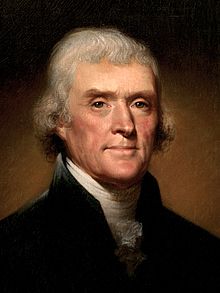
“Yes, allow me to present myself formally. I am Thomas Jefferson, your third President.”
“And I am James Madison, your fourth President. But I still think I deserve to be on that great big rock out there in the western wilderness.”
 “Jemmy, quiet down will ye?” The third man laughed, “And I am George Mason and
I did not live long enough to be a President, not that I had much time for
James’s handiwork…”
“Jemmy, quiet down will ye?” The third man laughed, “And I am George Mason and
I did not live long enough to be a President, not that I had much time for
James’s handiwork…”

Of course, now I felt ashamed and overwhelmed as each of the three men took on a nimbus, like Obi-Wan Kenobi, that critter and Darth Vader at the end of ‘Jedi’ or something. As the bleaching circle engulfed them in my vision,
I expressed my humiliation sincerely. “My God, gentlemen, I regret my coarse language and uncouth behavior…” My head ached even harder, yet I heard them
chuckling as I drew my hands into fists and placed them a couple of inches apart on the edge of the table.George answered, “It means that the world is yours, now, young man. It was ours yesterday, remains yours today and will be your children's tomorrow…”
Tommy clarified his point further, “Let me put it this way: we wrote that Amendment in a day of muskets in the wilderness and not in a time of super-weapons in crowded city streets. Yes, the Amendment represents a natural right in the sense that it remains unchanging and absolute over time. In that sense, the right itself is remote, eternal, unalienable as it defines nature and man. That natural right, absolute as it is, however, manifests from one generation to the next as natural law duly filtered through the variable circumstances of the times.”
So he had gone Platonist and pedantic on me when I had a migraine squeezing me back out of reality.
The three men remained silent, waiting for my response. Then, I finally pieced
it all together: the frilly shirts, the long coats, the hippie hair, the arcane
language, the antique references, the quaint anachronisms in speech and thought.
“You mean you are—““Yes, allow me to present myself formally. I am Thomas Jefferson, your third President.”
“And I am James Madison, your fourth President. But I still think I deserve to be on that great big rock out there in the western wilderness.”
“Jemmy, quiet down will ye?” The third man laughed, “And I am George Mason and
I did not live long enough to be a President, not that I had much time for
James’s handiwork…” “We’ve heard worse, laddie. Lend it no heed.” I could not tell who had said
those conciliatory words; likely, it was George. All three of the old men
laughed that kind of laugh of humility and wisdom finding contentment in the smallest lapses of everyday conventions. I leaned forward and lowered my
head to table, the pain was now too much and I could no longer countenance conformity. My fists tucked into my eye sockets, snugly so I could rest a minute
and restore my courage.
“We’ve heard worse, laddie. Lend it no heed.” I could not tell who had said
those conciliatory words; likely, it was George. All three of the old men
laughed that kind of laugh of humility and wisdom finding contentment in the smallest lapses of everyday conventions. I leaned forward and lowered my
head to table, the pain was now too much and I could no longer countenance conformity. My fists tucked into my eye sockets, snugly so I could rest a minute
and restore my courage.***
I was perspiring, still leaning on my fists in the eye sockets, for how long I can not tell you. The old trick seemed to have worked again as the pain was easing. I could hear the four voices but they were different, more familiar sounding. I could only make out fragments.
A new voice was saying, “About thirty minutes, doctor, just sitting there talking by himself about guns. It spooked some of the customers. Thankfully, he was in the corner and didn't wreck my business for the day.”
Then a man’s voice, slightly familiar seemed to be repeating, “And you say, cocking his head periodically in three distinct angles?”
I could hear what sounded like a woman gasping, perhaps in tears, speaking with a mellifluous accent, “It’s been so hard for him recently…”
A familiar voice, “So, Doctor Lincoln, is he going…”
The slightly familiar voice, “Look, Bert, sometimes you have to take away some freedom for someone to be free to live…”
I sat up and looked across the booth. It was empty, as was the circular table, except for my tea setting, an empty water pitcher plus glass and the tea-food server, minus three petits-fours and two finger sandwiches. The others did not notice me at first as Dr Lincoln assured Nellie, Bert and the Maître d´, “Don’t worry, he was well past the carrying stage when I left you a couple of hours ago…”
Nellie noticed me first and put her hand to her mouth. The others looked over at me. The Maître d´ stepped back to tend to the tea and announced, “No reason to worry, folks. Just a wicked hang-over!” He laughed gaily and so did the other patrons. That old feeling of being ridiculed for my drinking antics upset me; I opted for the better part of valor.
The doctor and my high-school class-mate walked over to me. Bertie put his hand on my shoulder, loyal as ever. Dr Lincoln put his hand on my forehead and smiled, saying, “Ah, very good! The fever seems to have broken…”
I was confused, “I was just sitting here with three men…”
“And I have a friend named Harvey, a wascally wabbit,” chuckled Bertie.
“No, seriously, Lambert…Never had the DTs this bad before; you know, I felt like I fell into the sun…”
“Damn you, you haven’t had a drink all week-end, you boring son of a bitch.” Obviously relieved in finding me, Bertie was back to his old self.
I shook my head in disbelief and said, “But the four of us were sitting right here, talking
about the Orlando shooting and--“
Dr Lincoln intervened gently, “Don’t worry, with your level of dehydration and
the temperature you were running, people often get hallucinatory, almost momentarily
psychotic, just when the fever peaks and breaks.”
“And it wasn’t just too much Tanqueray?”
Nellie said sweetly, “You poor thing, you somehow got cholera…”
I shrank back in guilt and fear. “Oh my God that means---“
Bert laughed and said, “Calm down we had our shots from the doc on Friday night when you collapsed and you were past the transmission stage by this morning. Glad we stayed home on Friday, even if it was Nellie’s cooking.”
Nellie slapped her husband on the shoulder. “Lambert, you can be such a damn Yankee at times.” The couple, two of my oldest friends in New York, laughed.
Dr Lincoln finished up where Bert left off, “Yes, don’t worry, no one is in danger but I want to take you over to Lenox Hill [Hospital] for some observations over the next day or two and, of course, to get you re-hydrated and find out where you've been the last week…”
Bertie added flippantly, “Don’t worry, better food than Saint Johnny’s -- guaranteed.”
There was nothing else to say, "I sure hope so, Lambert. So, I got sick. Meaning I shouldn't be punished?"
Nellie was curious, “If you don’t mind me asking, just what were you discussing with your, you know, 'friends'.”
I felt silly in admitting to the grandiose fabrication, “Well, Thomas Jefferson, James Madison and George Mason talked me into relaxing the Second Amendment in favor of gun control.”
“You?” Nellie laughed sweetly.
“Yeah, me, dahhhlinn'. I don’t get it any more than you do, frankly. You know how I am about the Second Amendment, especially after Iraq.”
Bertie whacked me on the back of the head lightly, “Well, I do get it, dumb ass. Madison put together the Constitution. Mason was the spirit behind the American Bill of Rights and Jefferson authored Declaration of Independence. T.J.'s long shadow from Paris got Mason's rights into the Constitution. You sure know how to pick your hallucinations, bud.”
Nelly went on, "So is the President so radical anymore?"
"Oh, Hell no, Nell. In fact, he is seems to run with better company than me."
Nellie laughed again in her sunny southern way, “Maybe you should be mental more often. It enlightens you!” Bertie and I smiled.
Dr Lincoln chuckled, too, and said, “Okay, gang, the Constitution -- even President Obama -- will be around in a few days. Let's get you over to Lenox Hill, shall we?”


